Euro Camper Market

Road safety. Habitation. Buyer confidence.

Motorhome Inspection & Warranty

The vehicle and the living space, considered together.

A motorhome combines a base vehicle with a living area, electrical installation, water, heating, gas and camping equipment. The inspection arrangements should reflect the complete motorhome, including campervans.

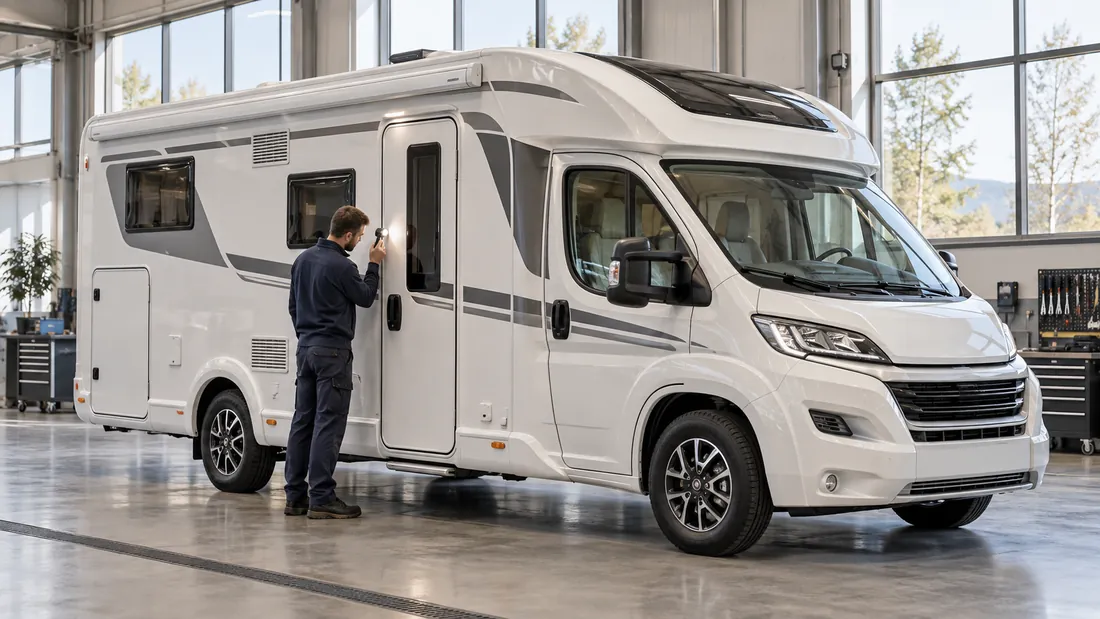
Illustrative motorhome inspection in a clean workshop, with a technician beside the habitation body

The scope, available records and warranty are confirmed for the individual vehicle. You can request existing inspection records before completing your purchase; this page does not certify that every listed check has been performed.

Built to travel. Equipped to live.

Why a Motorhome Inspection Is Different

Roadworthiness is only one part of the picture. The condition of the habitation body and its everyday systems matters too, from roof seals and moisture to power, water and heating. A clear inspection scope helps you understand what has been checked and what still needs attention.

Road Safety

The base vehicle, chassis, engine, drivetrain, brakes, suspension, tyres and driving systems.

Habitation & Camping Systems

Body seals, moisture, gas, electrical equipment, water, heating and fitted appliances.

Buyer Confidence

Available records, clear findings, independent inspection options and individually confirmed warranty terms.

Two complementary areas

Two Inspections in One

The agreed inspection can cover both the mechanical vehicle and the habitation systems. The equipment fitted and access available determine the checks relevant to each motorhome.

Vehicle & Chassis

Mechanical condition and road-safety components of the base vehicle.

  • Engine, transmission and axles
  • Brakes, steering and suspension
  • Chassis, exhaust and visible fluid leaks
  • Starter battery and vehicle lighting
  • Wheels and tyres, including age and visible condition
  • Electronic diagnostics where applicable

Habitation & Camping Systems

The body and fitted equipment that turn a vehicle into a home on the road.

  • Body, roof, seals, windows, rooflights, doors and service hatches
  • Moisture and water-ingress checks where arranged
  • LPG installation, heating, hot water, refrigerator and cooker where fitted
  • 12V and 230V shore-power systems, leisure battery and charging
  • Solar installation where fitted; fresh water, waste water and toilet
  • Interior fixtures, furniture, beds, storage and ventilation

Motorhome Inspection at a Glance

An overview of possible checks, subject to the individual inspection scope and equipment fitted.

  • Documentation & history
  • Engine & drivetrain
  • Brakes & suspension
  • Chassis & underbody
  • Tyres & wheels
  • Roof & body seals
  • Moisture & water ingress
  • Windows & rooflights
  • LPG system where fitted
  • 12V electrical system
  • 230V shore-power system
  • Leisure battery
  • Solar system where fitted
  • Habitation heating
  • Hot-water system
  • Refrigerator
  • Cooker
  • Fresh-water system
  • Waste-water system
  • Toilet
  • Interior equipment
  • Camping accessories
  • Road test where arranged
  • Inspection documentation

A closer look at the complete motorhome

The Motorhome Inspection Process

These eleven areas describe the checks that can form part of an agreed inspection. Findings, limitations and outstanding work should be recorded for the specific vehicle.

Step 01

Vehicle Identity & Documentation

Review the identity of the motorhome and the records available for it.

Identity & history

  • VIN or chassis identification, registration documents and recorded mileage
  • Available service records, maintenance history and previous inspection documentation
  • Available repair invoices and accident information

Motorhome-specific records

  • Conversion documentation where applicable
  • Documentation for installed accessories where available
  • Previous LPG or gas inspection records where applicable

Historical information depends on the documents available for the individual vehicle. Missing records are identified; they are not replaced with assumed history.

Step 02

Exterior, Body & Roof

Inspect accessible parts of the body, roof and external fittings, taking account of the equipment fitted.

Body & openings

  • Roof, sidewalls, rear wall and front body section
  • Body joints, seals and sealant condition
  • Windows, rooflights, entrance doors and garage doors
  • External storage compartments and service hatches

Fitted accessories & connections

  • Awning, external steps and bike rack where fitted
  • Solar-panel mounts and satellite equipment where fitted
  • External power and water connections

Visible condition

  • Cracks, impact damage, deformation and corrosion
  • Damaged seals and deteriorated sealant
  • Evidence of previous repairs and potential water-entry points
Step 03

Moisture & Water-Ingress Check

Where included or separately arranged, assess accessible habitation areas for signs of damp and water ingress.

Joints & openings

  • Around windows and rooflights, including roof and wall joints
  • Doors, garage openings and service hatches
  • Floor-to-wall connections and habitation corners

Living areas & external fittings

  • Bathroom and kitchen areas
  • Areas around exterior fittings and possible water-entry points
  • Visible water staining, swelling or other signs of moisture

Record the findings

  • Use a suitable moisture measuring device where appropriate
  • Document readings and suspicious areas with notes or photographs where available

Suitable moisture readings may be taken where the materials and access allow. The vehicle record confirms whether testing was performed, its scope and any limitations; no moisture test is implied for every motorhome.
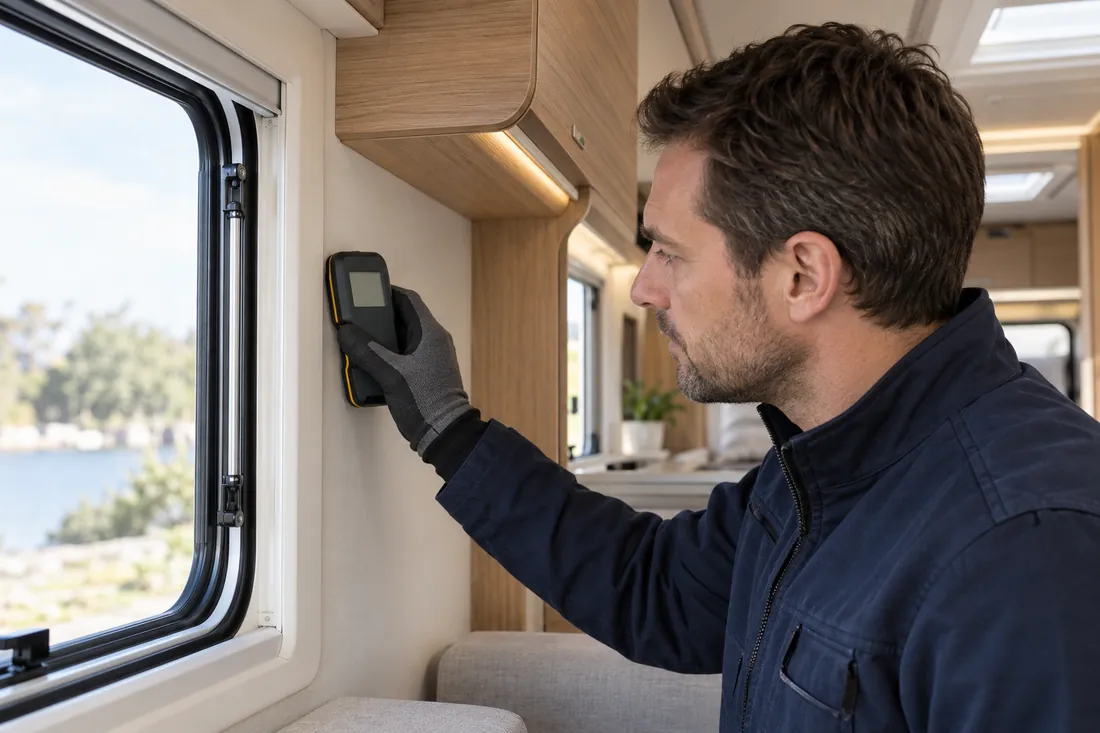
Illustrative moisture check around a motorhome window and wall joint using a handheld meter
Step 04

Chassis & Road Safety

Assess accessible mechanical and safety components of the base vehicle; specialist checks depend on the agreed scope.
Structure & running gear

  • Chassis, underbody and visible corrosion
  • Axles, suspension, shock absorbers and springs
  • Steering and wheel bearings where assessable

Brakes & drivetrain

  • Brakes and brake lines
  • Engine compartment, transmission and driveshaft or drivetrain where applicable
  • Exhaust and visible fluid leaks

Road-safety equipment

  • Wheels; tyre condition, age and load rating where relevant
  • Exterior lighting, windscreen and mirrors
  • Seat belts and safety equipment

Electrical & diagnostic checks

  • Starter battery condition where included
  • Electronic diagnostic scanning, fault codes and relevant system checks where appropriate
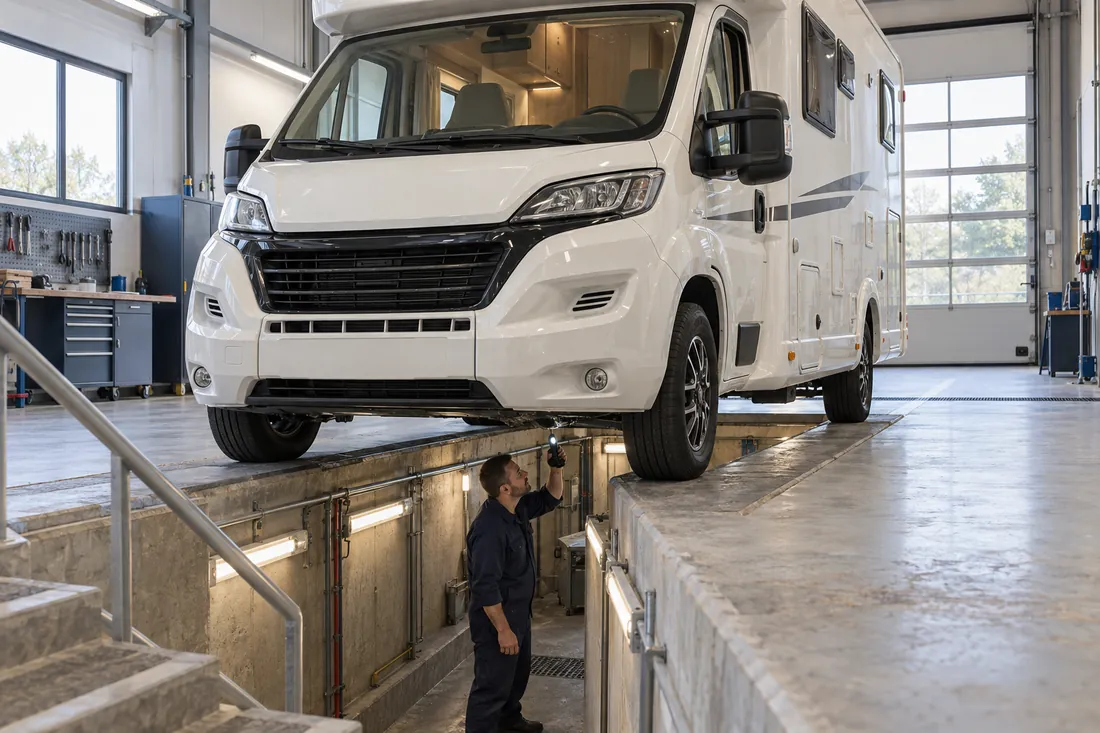
Illustrative inspection of a motorhome chassis, underside and road-safety components
Step 05

LPG / Gas-System Check

Where an LPG installation is fitted and an inspection is applicable, relevant supply components and appliances can be checked.

Supply & installation

  • Gas-cylinder compartment and cylinder securing system
  • Regulators, hoses, pipework, connections and shut-off valves
  • Visible installation condition and leak-tightness testing by qualified personnel

Ventilation & combustion

  • Ventilation and unobstructed gas-compartment openings
  • Combustion-air supply
  • Exhaust and flue routing

Gas appliances where fitted

  • Operation of the cooker and habitation heating
  • Operation of the refrigerator and hot-water system

Leak-tightness testing and any required certification must be carried out by appropriately qualified or authorised personnel under the rules applicable to the vehicle and its location. Euro Camper Market does not itself claim to issue regulatory gas certificates.
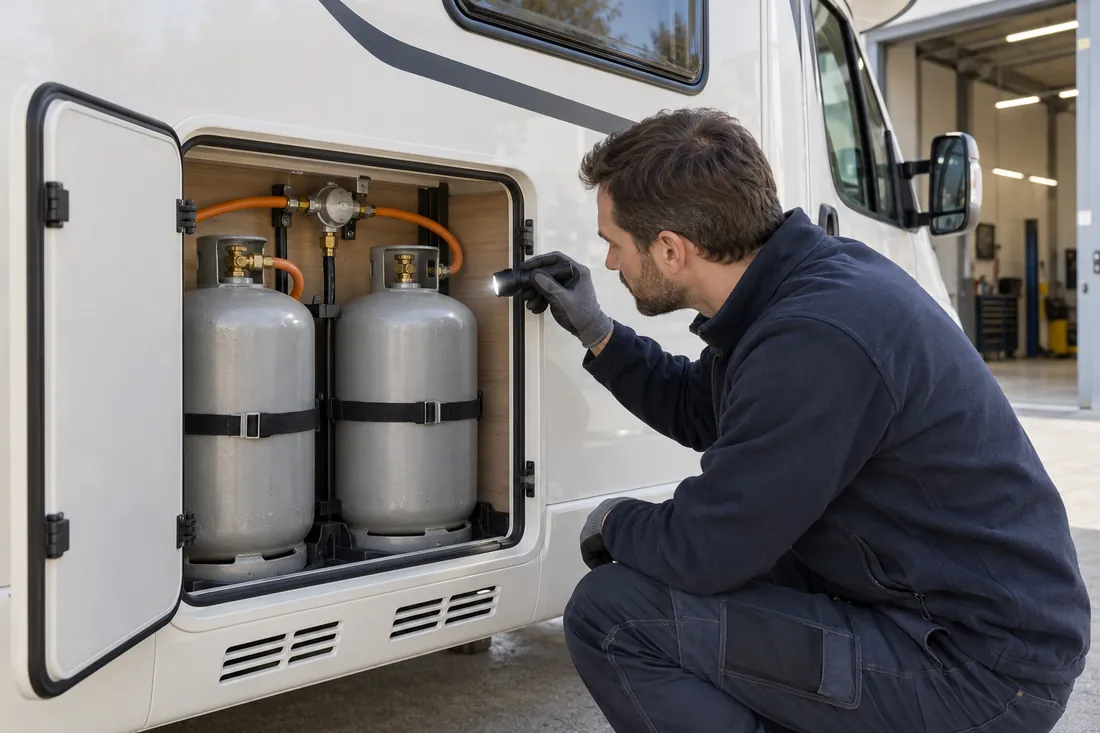
Illustrative inspection of a motorhome gas-cylinder and utility compartment
Step 06

12V & 230V Electrical Systems

Assess the fitted electrical systems within the agreed scope, distinguishing battery power from external mains power.

12V system

  • Leisure and starter batteries, including condition where assessable
  • Charging system, alternator charging and battery charger
  • Control panel and interior lighting
  • Water-pump supply and USB or 12V outlets
  • Refrigerator supply and electrical accessories

230V system where applicable

  • External shore-power connection and internal sockets
  • Charging equipment and visible wiring condition
  • Electrical protection equipment and residual-current devices (RCDs) where installed

Additional equipment where fitted

  • Solar panels and solar regulator
  • Inverter and additional batteries
  • Lithium battery systems and auxiliary charging systems

Visual and functional checks are distinct from formal electrical inspection or certification. Any work or testing that requires specialist competence must be performed by an appropriately qualified provider; no certification is implied unless documented.

Step 07

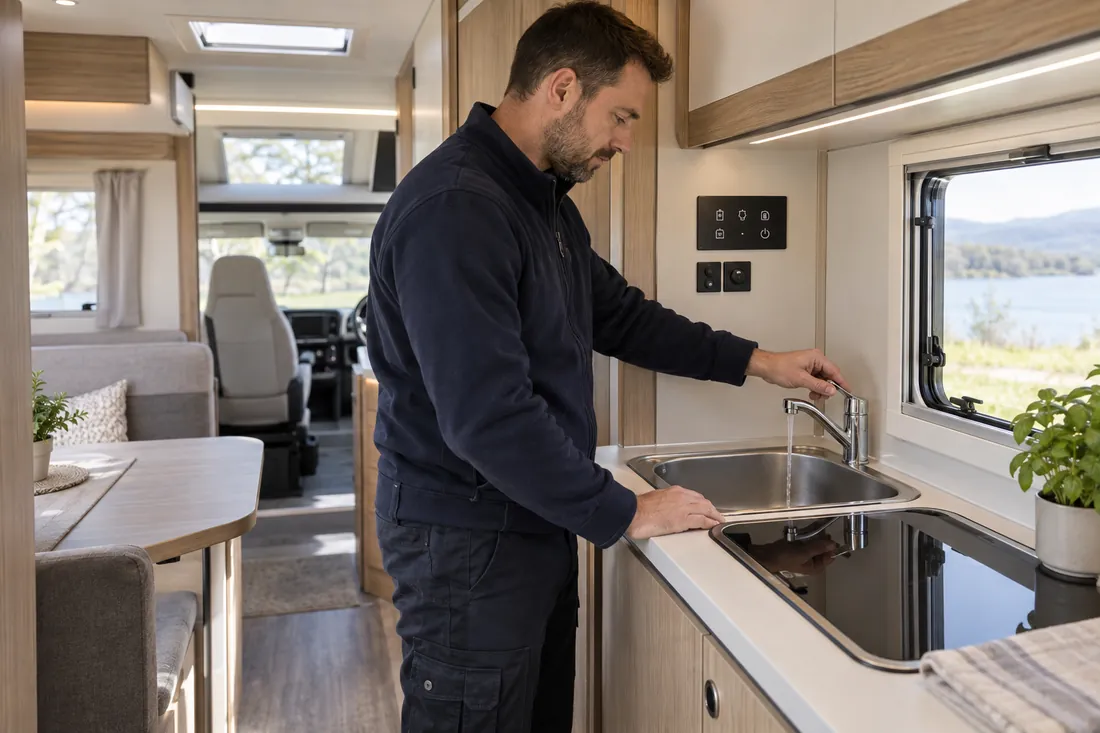
Water & Plumbing

Check the fitted fresh-water, hot-water, waste-water and toilet systems where access and testing conditions permit.
Fresh water

  • Fresh-water tank condition, filler and water pump
  • Pipework, taps, shower and sinks
  • Visible leaks and operation where testing is possible

Hot water

  • Boiler or water heater and controls
  • Visible pipework and operation where testing is possible

Waste water

  • Waste-water tank and drain valves
  • Pipework and visible leaks

Toilet

  • Cassette toilet, flush system and removable cassette
  • Seals and external access door
Illustrative check of a motorhome kitchen and habitation water and electrical systems
Step 08

Heating, Refrigeration & Camping Appliances

Inspect or test installed habitation appliances and accessories where fitted and within the agreed scope.

Everyday appliances

  • Habitation heating and hot-water boiler
  • Refrigerator and freezer compartment
  • Cooker and extractor or ventilation

Comfort & controls

  • Roof fans and air conditioning
  • Control panels
  • Electric step and awning operation

Additional fitted equipment

  • Satellite and television equipment
  • Other installed camping equipment identified in the inspection scope
Step 09

Interior & Habitation Body

Review accessible interior surfaces, furnishings and fittings, including their visible condition and operation where applicable.

Furniture & living space

  • Furniture, cabinets, hinges, drawers and locks
  • Seating, upholstery, beds, bed mechanisms and tables
  • Storage compartments and garage

Surfaces & openings

  • Flooring, walls, ceiling, bathroom, shower and kitchen
  • Blinds, flyscreens and curtains
  • Rooflights, windows, entrance door and interior lighting

Signs requiring attention

  • Damage, unusual wear and damaged furniture
  • Water staining, swelling and evidence of moisture
  • Loose fittings and insecure attachments
Step 10

Road Test

When a road test is part of the agreed inspection and circumstances allow, assess how the motorhome starts and drives.

Engine & transmission

  • Engine starting, idle and acceleration
  • Transmission operation and clutch where applicable

Handling & braking

  • Steering, braking and suspension behaviour
  • Vibration, abnormal noises and general drivability

Driving systems

  • Warning lights during the test
  • Cruise control where fitted and test conditions permit

A road test is not promised for every vehicle. Its availability, route, scope and any limitations are confirmed for the individual motorhome.

Step 11

Clear Results Before Handover

Available findings can be brought together in the inspection report or vehicle file, with outstanding questions clearly identified.

Supporting evidence where available

  • Photographs, inspection notes and measurements
  • Service records and diagnostic information
  • Third-party inspection reports

Handover preparation

  • Review final documents and clarify outstanding work or missing records
  • Confirm agreed vehicle preparation, delivery and handover details

Only actual records and observations are supplied. A checklist or illustration is not an inspection certificate or proof that a particular vehicle passed.

An independent second opinion

Independent Inspection Welcome

You may request an independent inspection before completing your purchase, subject to the motorhome’s location, access and appointment arrangements.

Depending on the country and availability, this can be arranged with an independent technical inspection organisation, an authorised workshop or a qualified motorhome specialist. Provider availability and the agreed scope are confirmed individually.

Inspection and warranty have different scopes

Warranty for the Individual Motorhome

Depending on vehicle condition, country and selected warranty package, customers may receive protection against unexpected mechanical and electrical failures.

Base Vehicle Components

Protection After Purchase

  • Engine
  • Automatic Transmission
  • Manual Transmission
  • Turbocharger
  • Differential
  • Cooling System
  • Electrical Components
  • Air Conditioning
  • Fuel System

Habitation Equipment

An inspection of gas, heating, water, electrical or other habitation equipment does not automatically mean these systems are included in the warranty.

Any habitation-equipment cover must be expressly confirmed in the terms for the specific vehicle. The written coverage, exclusions and claim procedure determine what applies.

Warranty: 12 Months

Where confirmed in writing for the individual vehicle, the 12-month warranty can cover core mechanical and electrical parts. Approved repair costs are handled according to the warranty terms and invoice process.
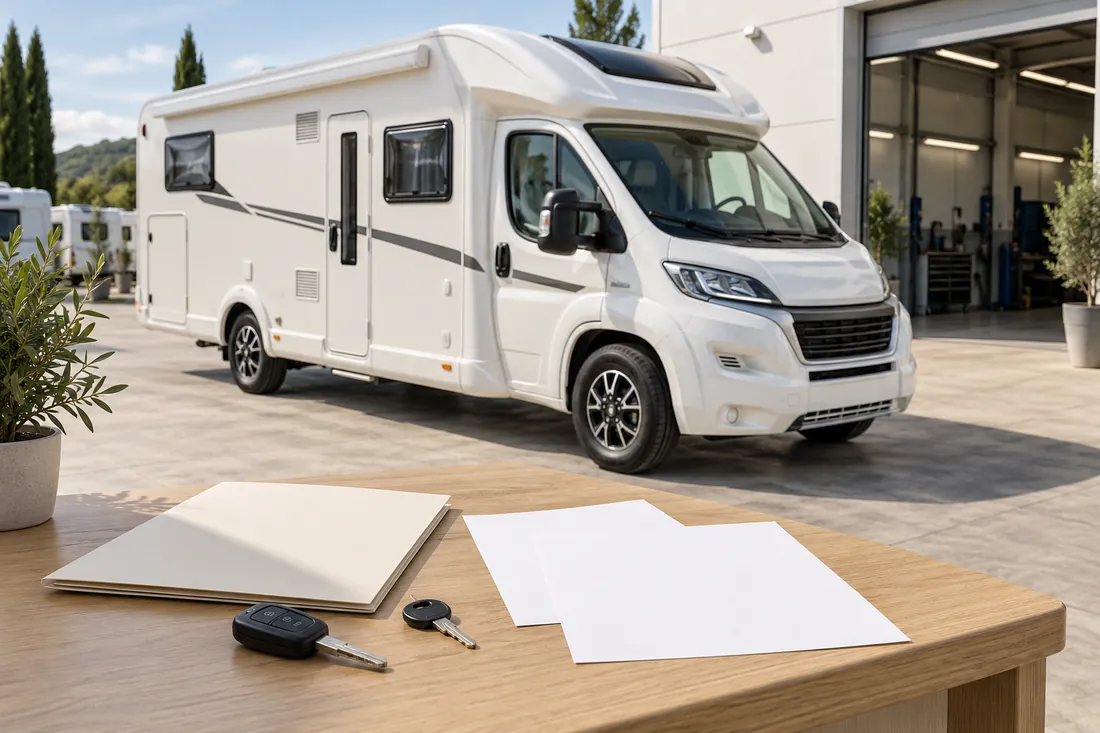
Illustrative motorhome prepared for handover with documents and keys
12 months

What's covered

  • Engine and internal components
  • Transmission, manual and automatic
  • Drivetrain and differential
  • Steering mechanism
  • Brake system core components
  • Suspension core components
  • Electrical system
  • Fuel injection system
  • Cooling system
  • Air conditioning compressor
  • Starter and alternator

What's not covered

  • Wearing parts such as brake pads, discs and clutch
  • Tires, wipers, bulbs and filters
  • Cosmetic defects and normal wear
  • Damage from improper use or modifications
  • Damage from accident or third parties
  • Consumables such as oil, fluids and coolant

Authorized workshops only. Costs are processed against invoice and remain subject to the warranty terms, vehicle condition and written confirmation for the specific vehicle.

Simple Warranty Claim Process

  1. Contact Euro Camper Market

  2. Provide vehicle information

  3. Receive repair authorization

  4. Complete approved repair process

14-day return period · terms apply

Buy With Confidence

Eligible vehicles include a 14-day voluntary return option according to our return policy.

View Return Policy

Warranty terms

Need complete legal information?

Read the full warranty terms, statutory rights, exclusions, claim procedures and return policy conditions.

View Complete Warranty Terms

Start with the vehicle you are considering

Want to Know the Condition of a Specific Motorhome?

Contact Euro Camper Market to confirm the available inspection records, service history, warranty coverage and independent-inspection options for your chosen motorhome.